Month 1 Milestone Progress Report
ACTM University of Maryland
1. Identification of Hybrid Model
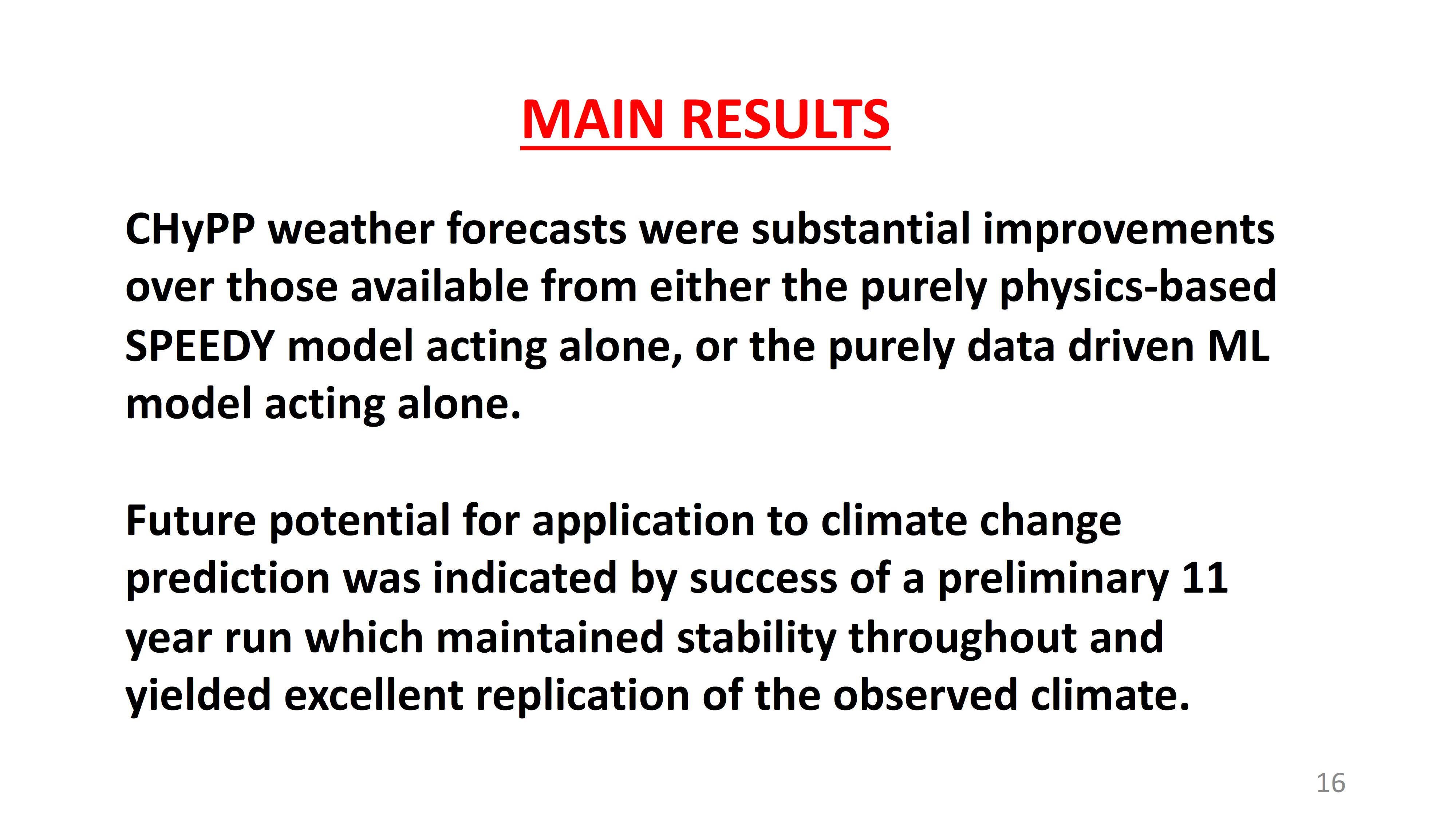
We plan to develop a hybrid physics-based/machine-learning-based model for prediction of climate change evolution and tipping point prediction.
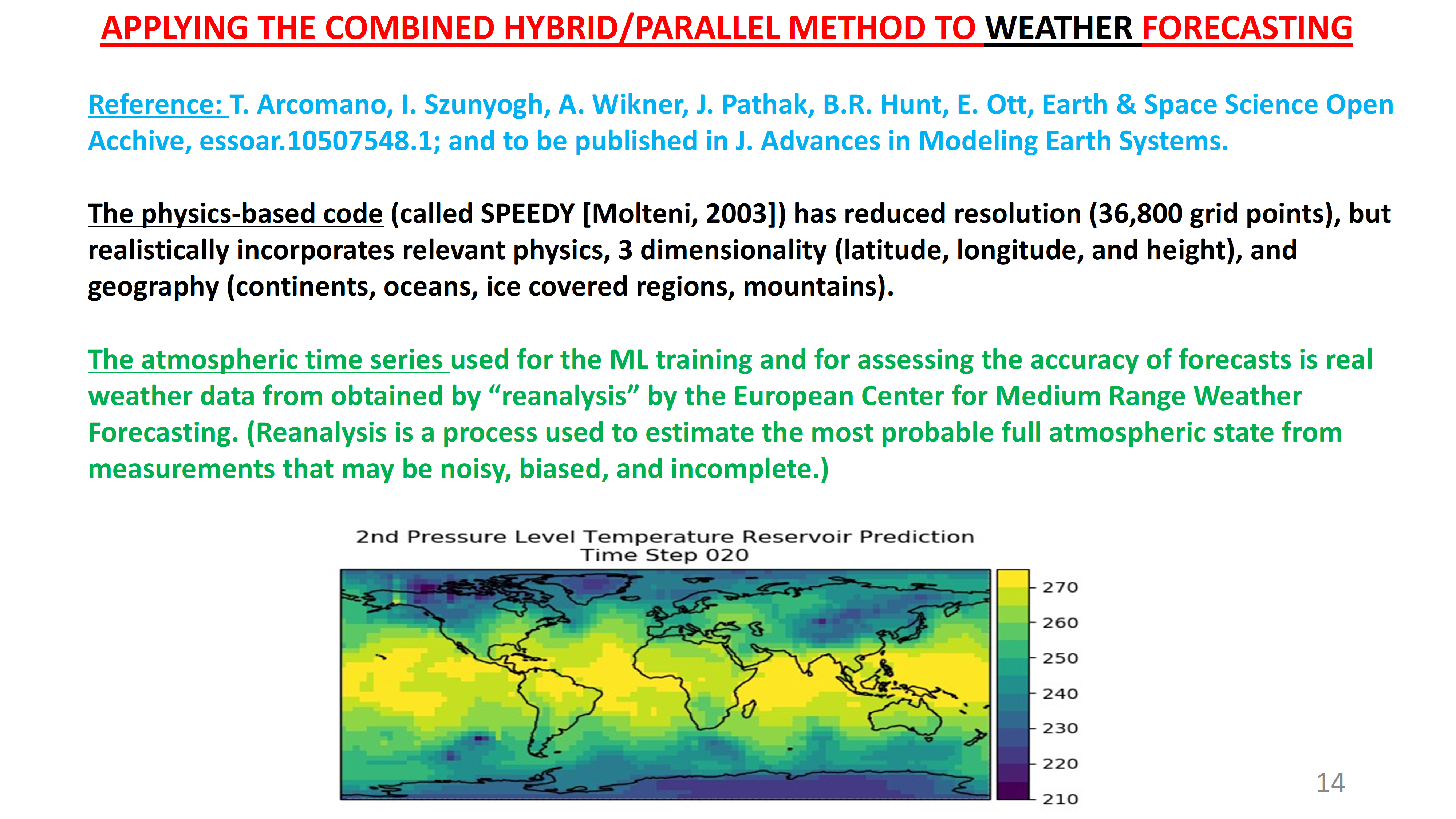
The physics-based component will be the publicly available Simplified Parameterizations, primativE-Equation Dynamics (SPEEDY) model code, which, although reduced resolution, incorporates relevant physics and realistic terrestrial geography (e.g. mountain ranges, ice covered regions, oceans, etc.), and is three dimensional, employing a grid in latitude, longitude, and height above the surface of the earth. (See pages 14-16 of the PowerPoint in Sec. 4.) We will also couple the atmospheric dynamics with a slab ocean model.
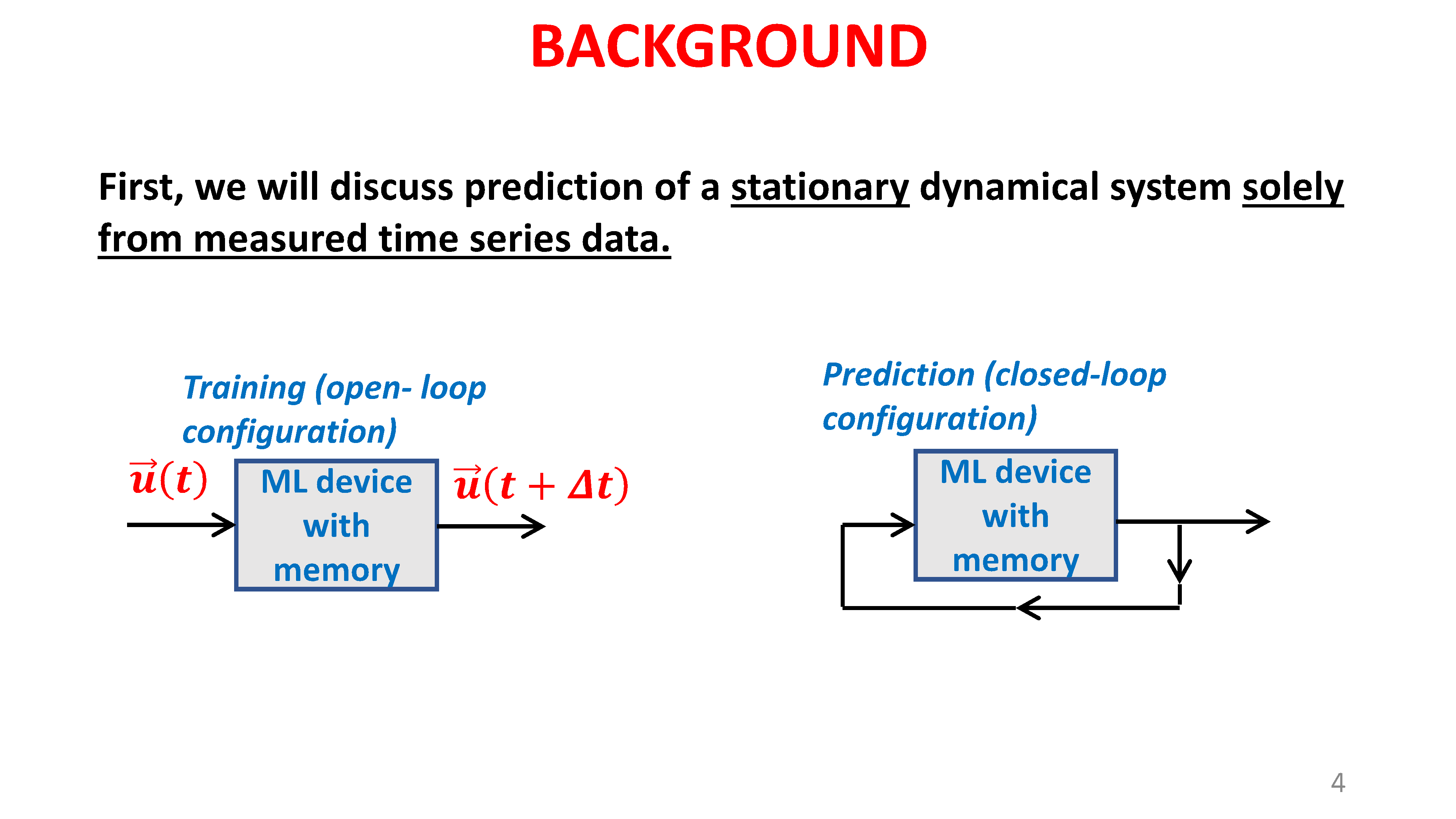
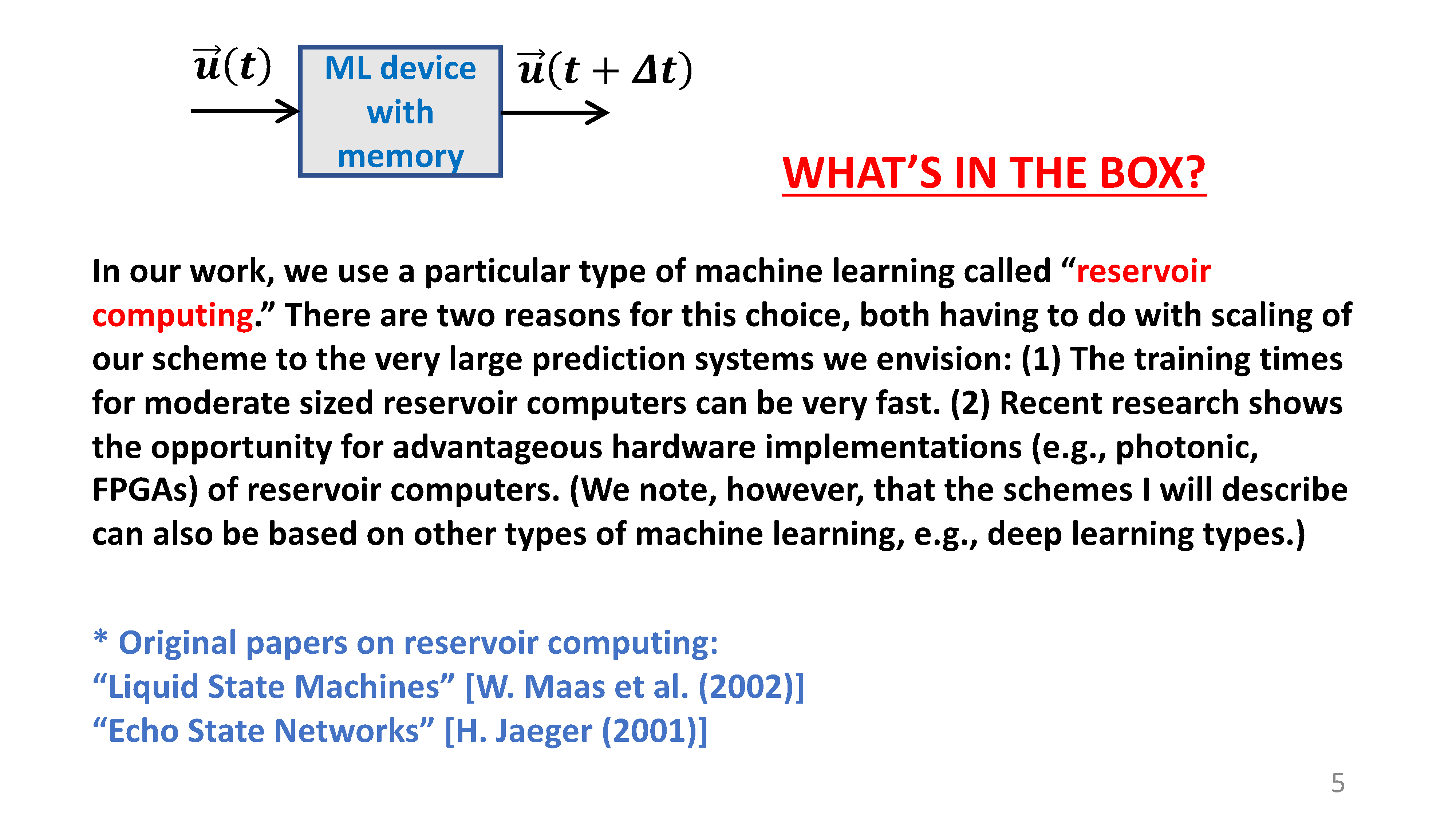
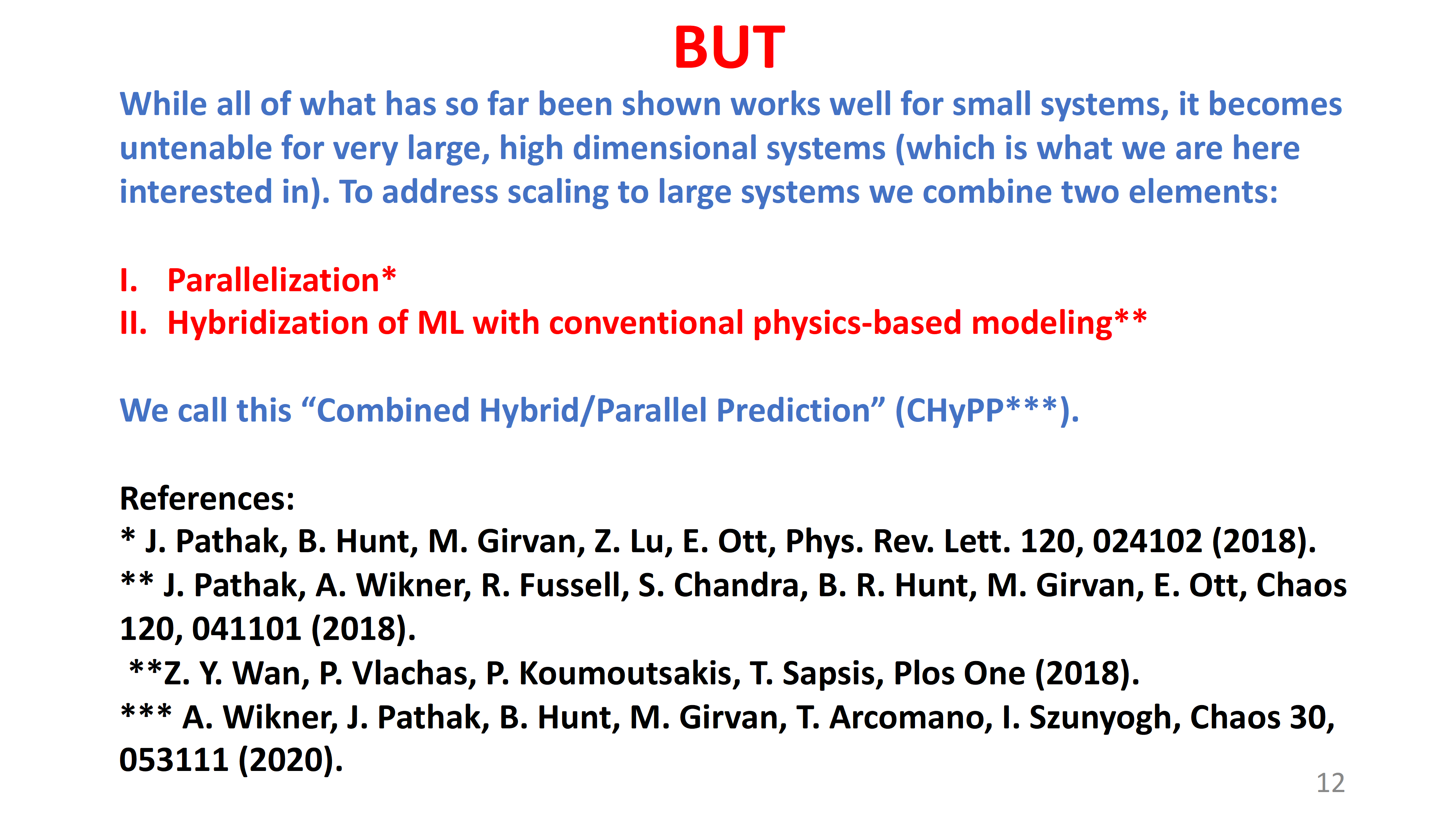
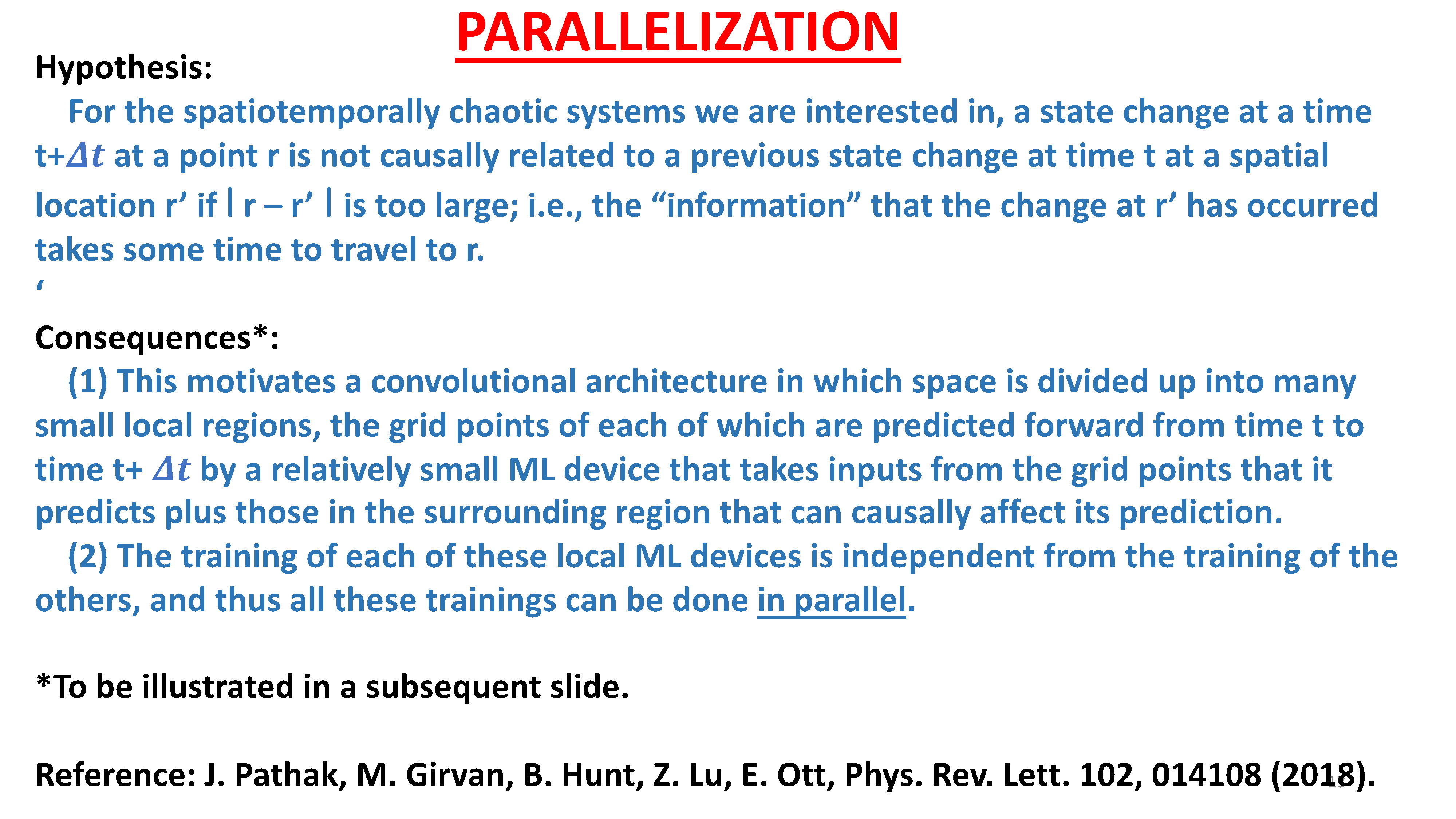
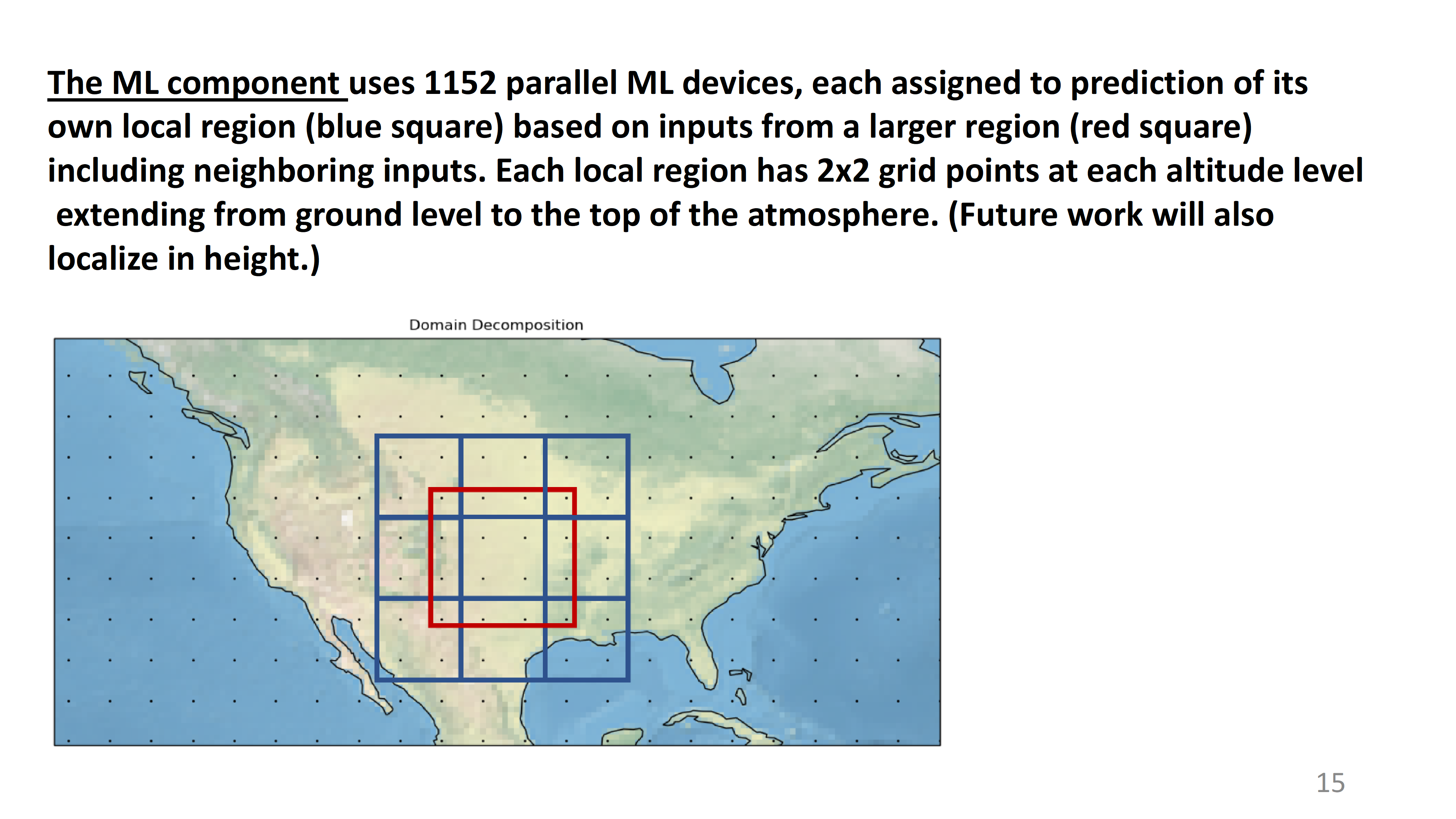
The machine learning component will be based on a reservoir computing to take advantage of its ability for rapid training. In addition, for purposes of scaling to large scale systems, we will employ a parallel scheme utilizing many, relatively small reservoir computers combined via a convolutional architecture.
For further details see Sec. 4 and the references therein.
2. Planned Datasets
For the training, tuning, and evaluation of the hybrid physics-based/machine-learning-based model, we plan on using the ERA 5 reanalysis dataset . ERA 5 is the latest observation-based dataset produced by the European Centre for Medium-Range Forecasts (ECMWF). ERA5 has hourly data from 1979 till the present and contains numerous atmospheric and oceanic variables relevant to climate change (e.g. sea-surface temperature, winds, and moisture).
Once the data is acquired, we will regrid the data to the SPEEDY model grid and begin training the hybrid model.
3. Problems and Effects to be Investigated
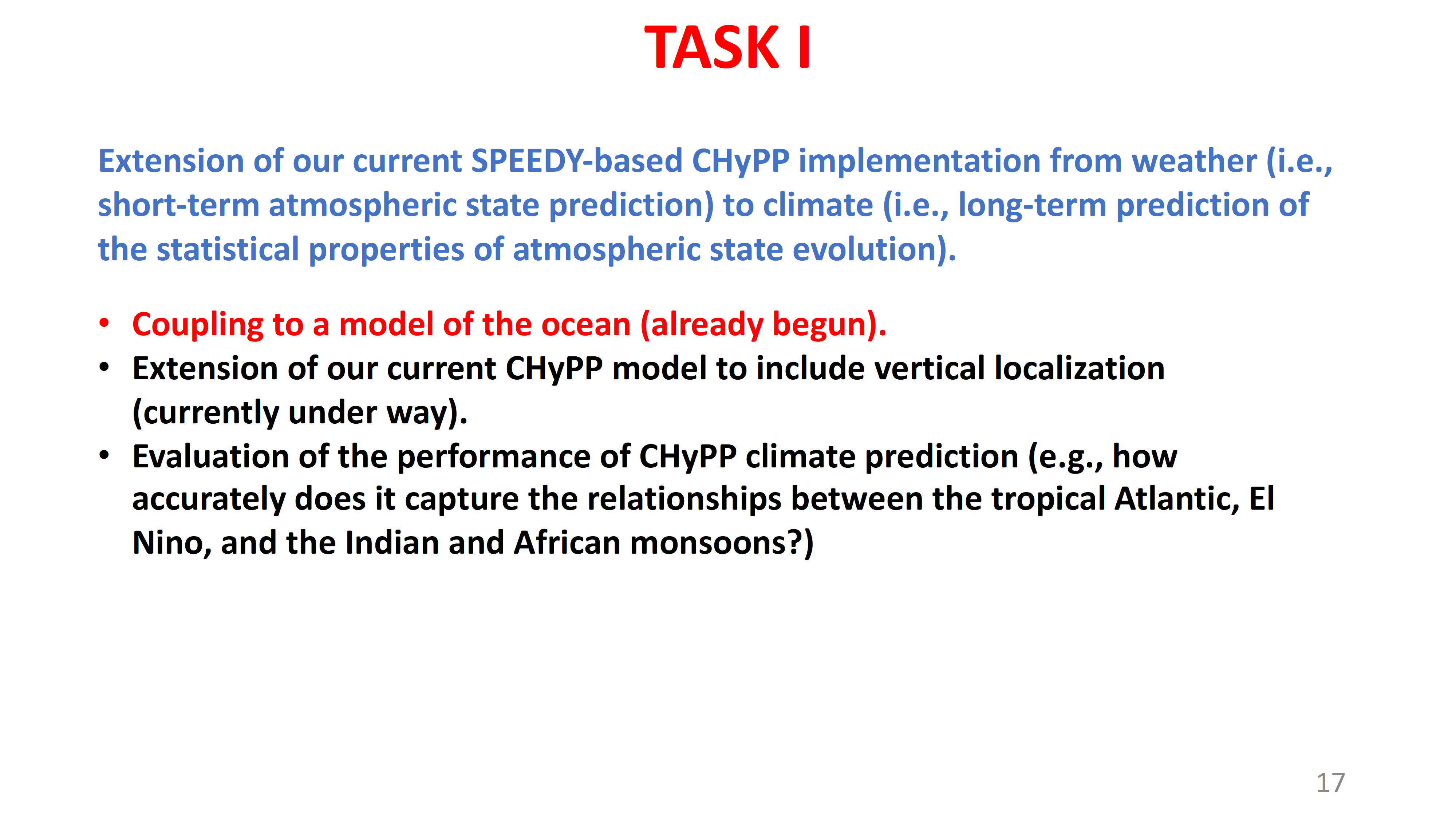
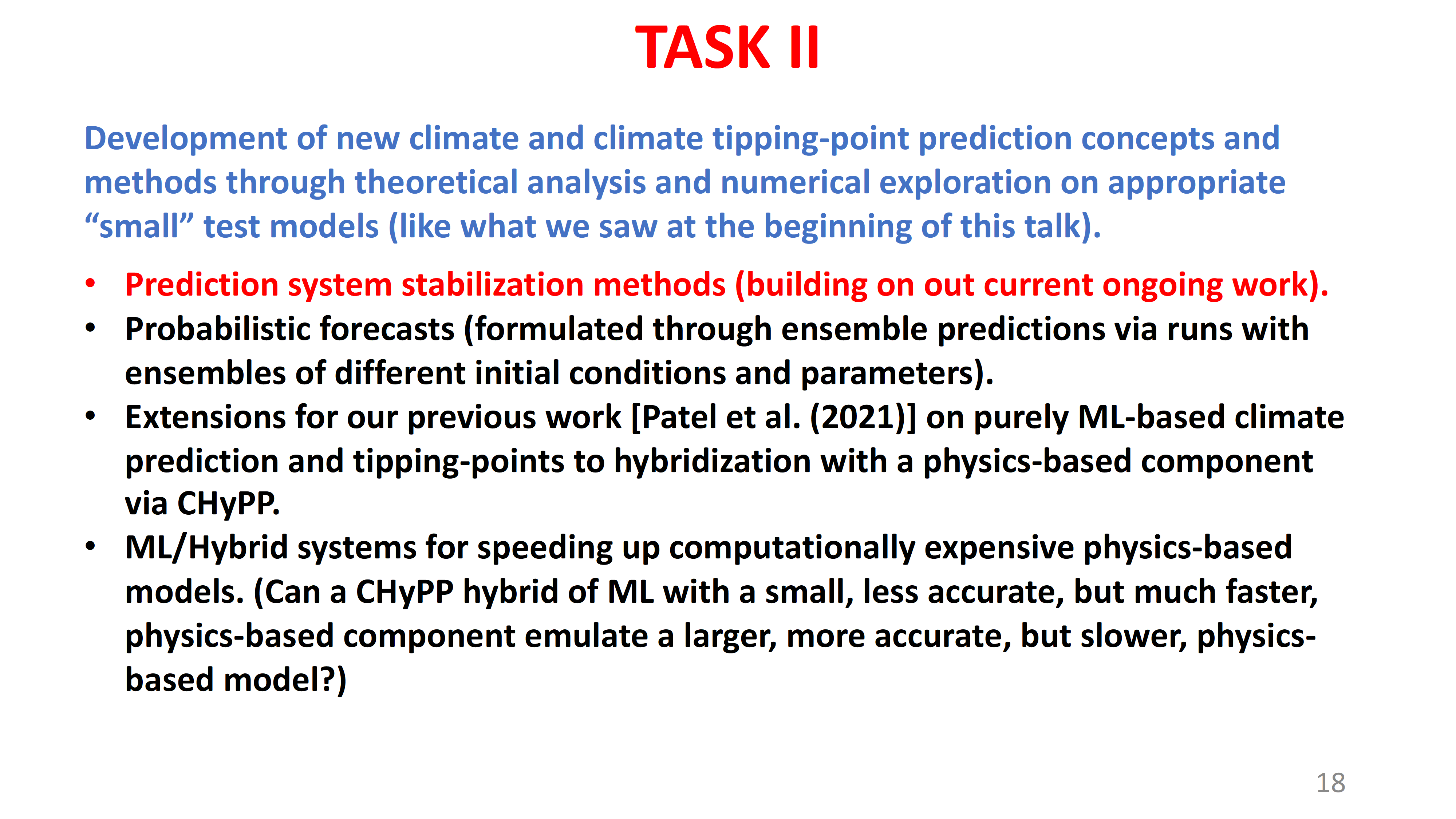
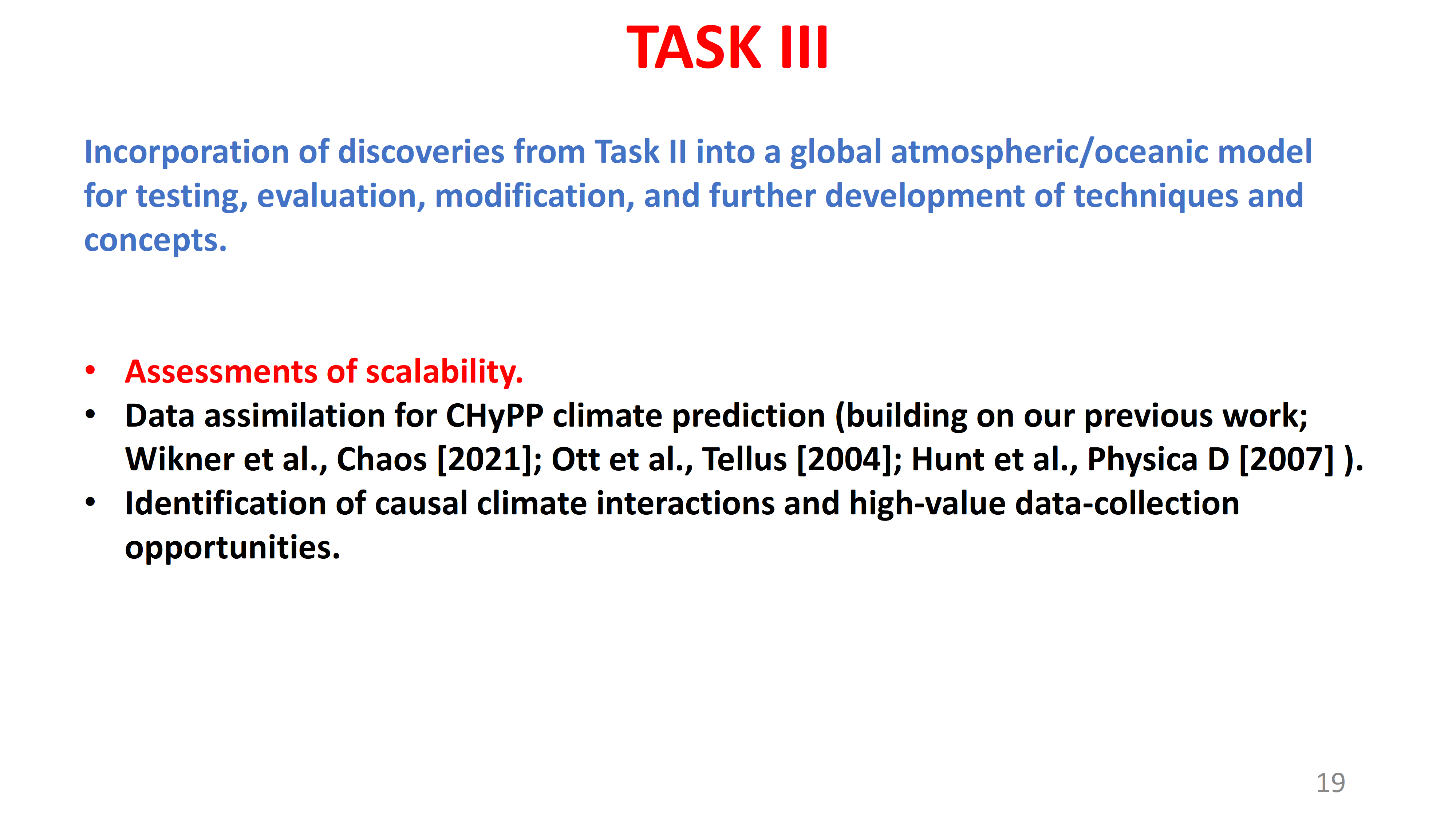
See Sec. 4 for a list of problems and effects that will be addressed (pages 17-19 of the PowerPoint in Sec. 4). To begin within the next few months, we will concentrate on the following three things:
-
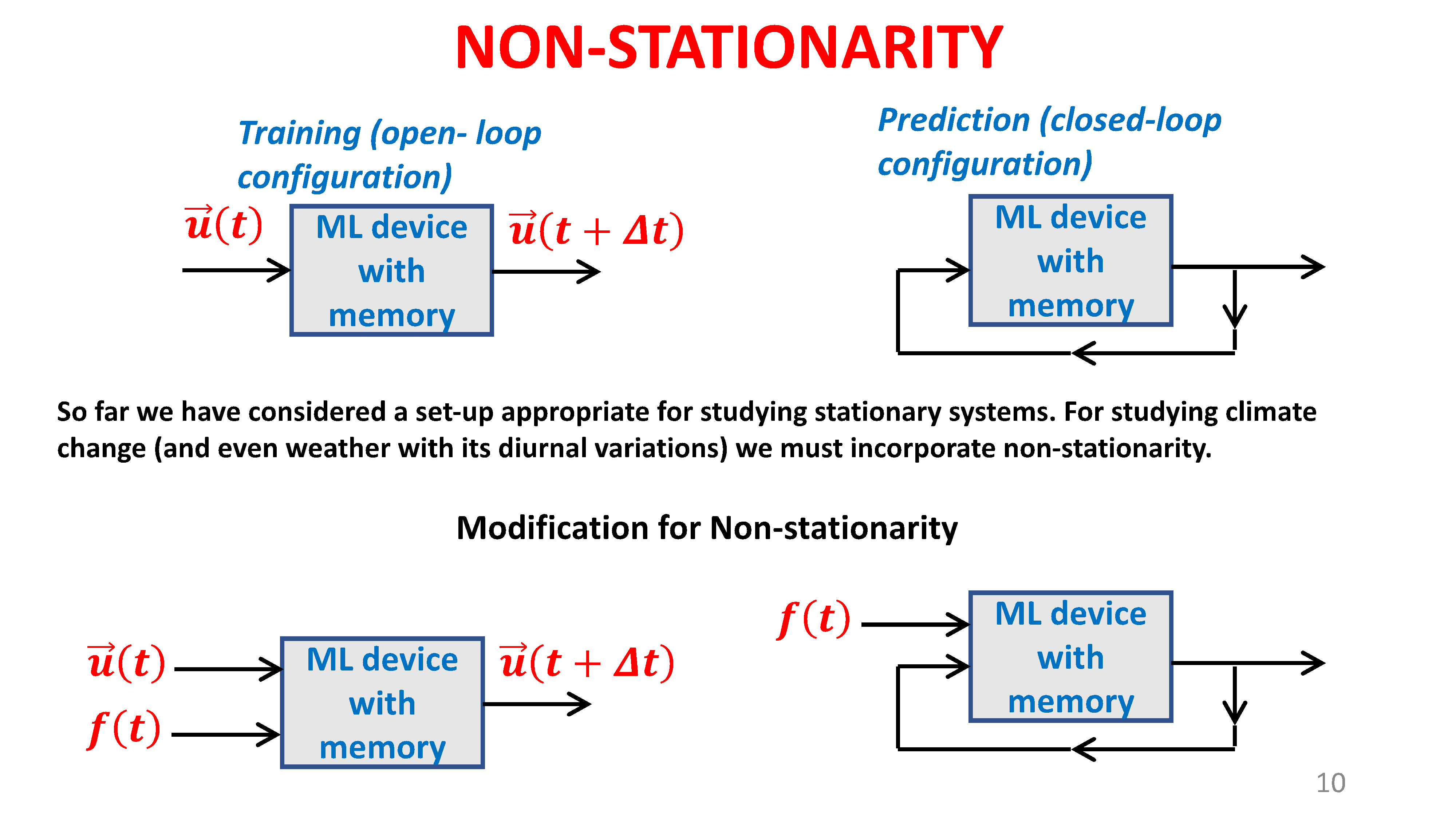
Extending your present hybrid scheme implementation (which currently is based on atmospheric dynamics) to self-consistently incorporate coupling between ocean and atmospheric dynamics.
-
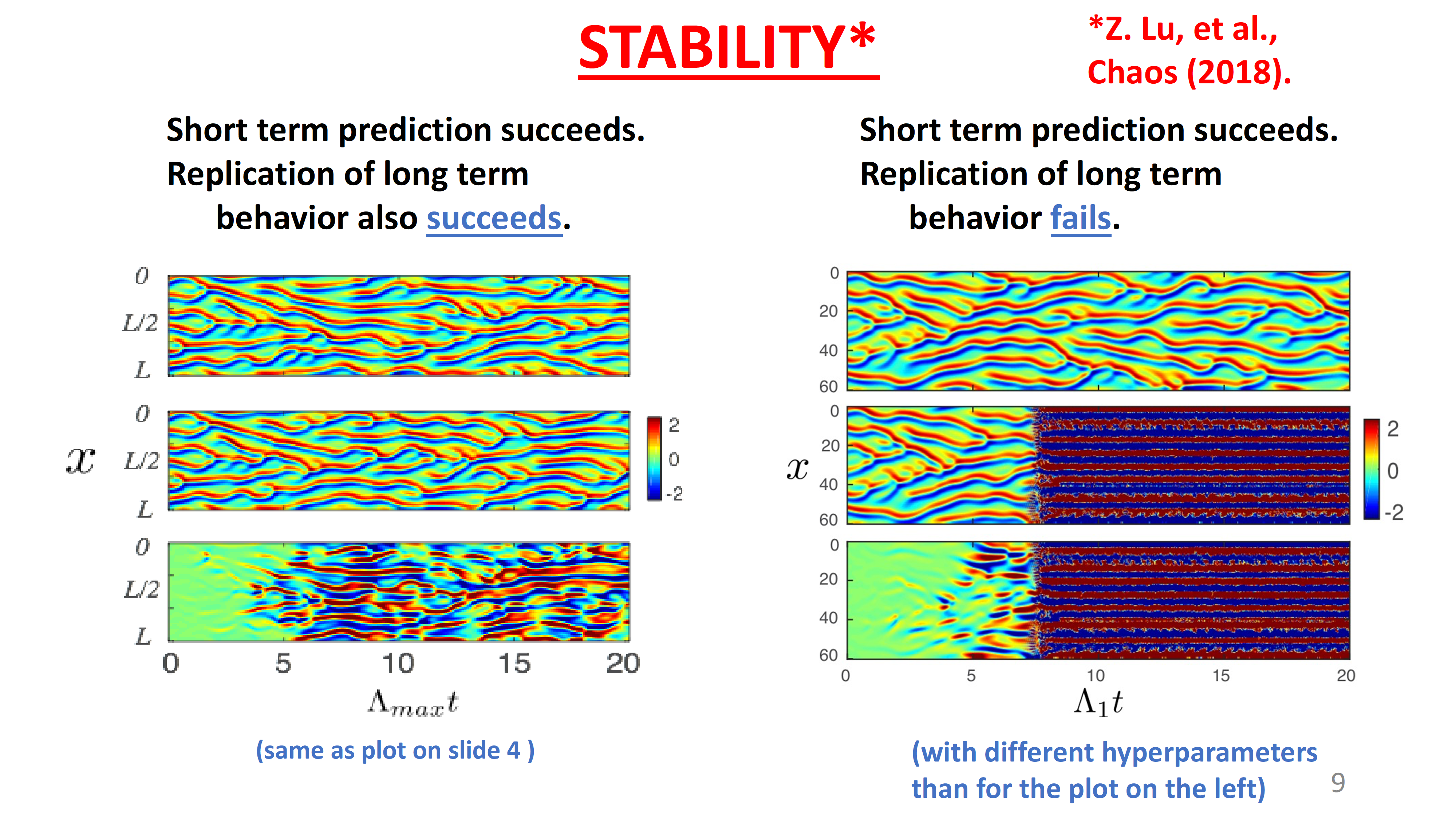
Development and testing of theory and techniques for insuring hybrid operation that avoids “numerical instabilities”.
-
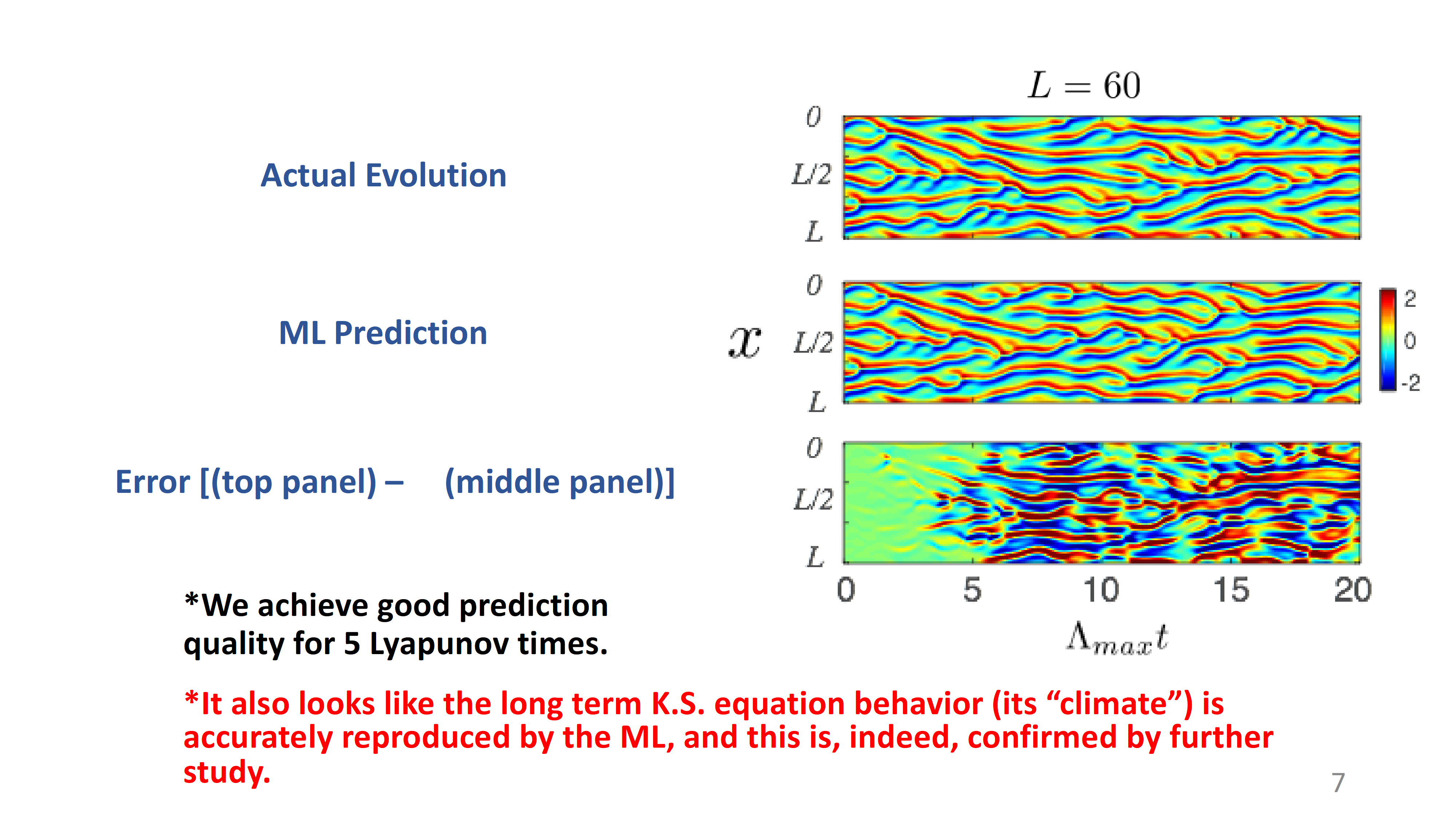
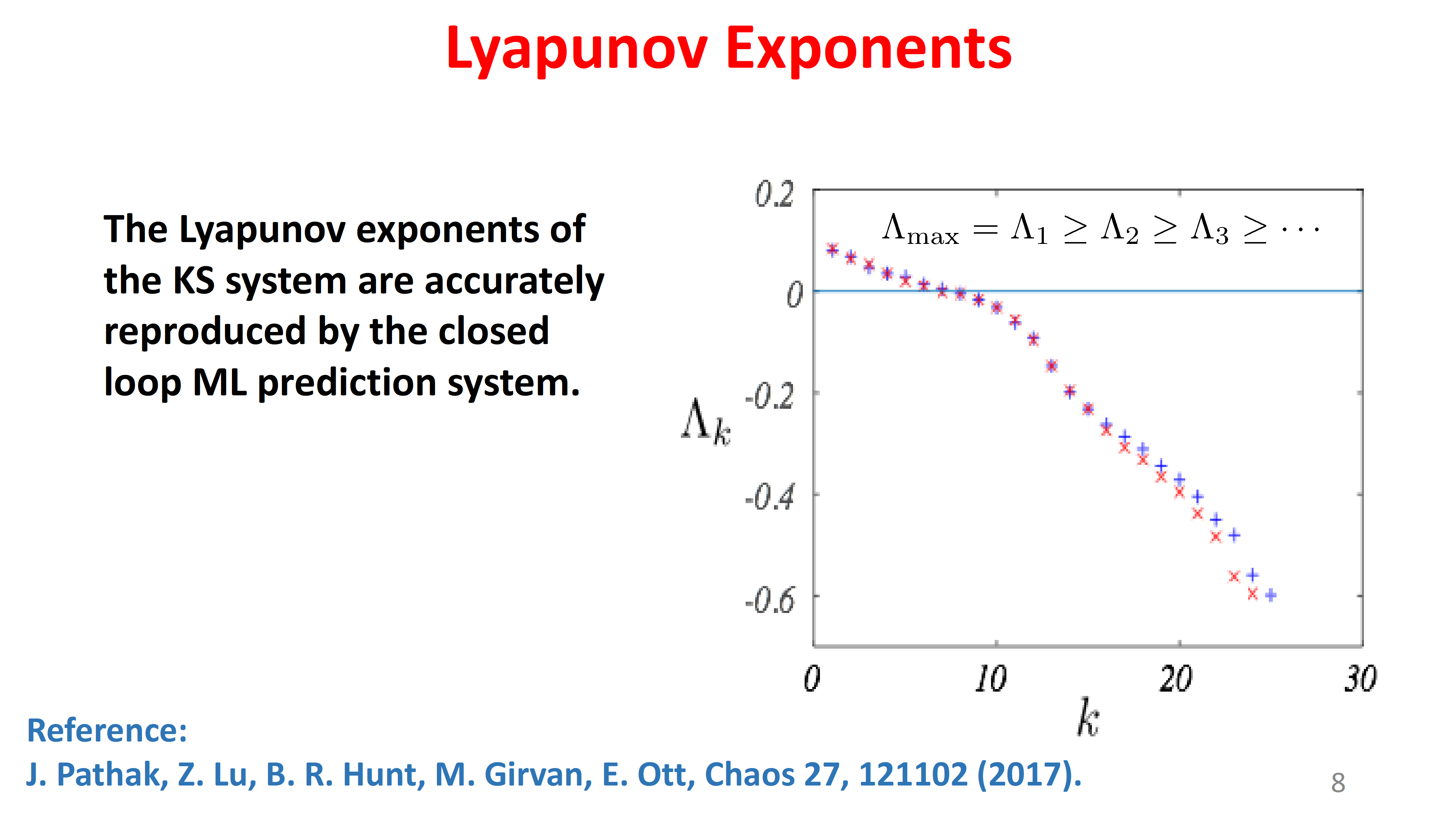
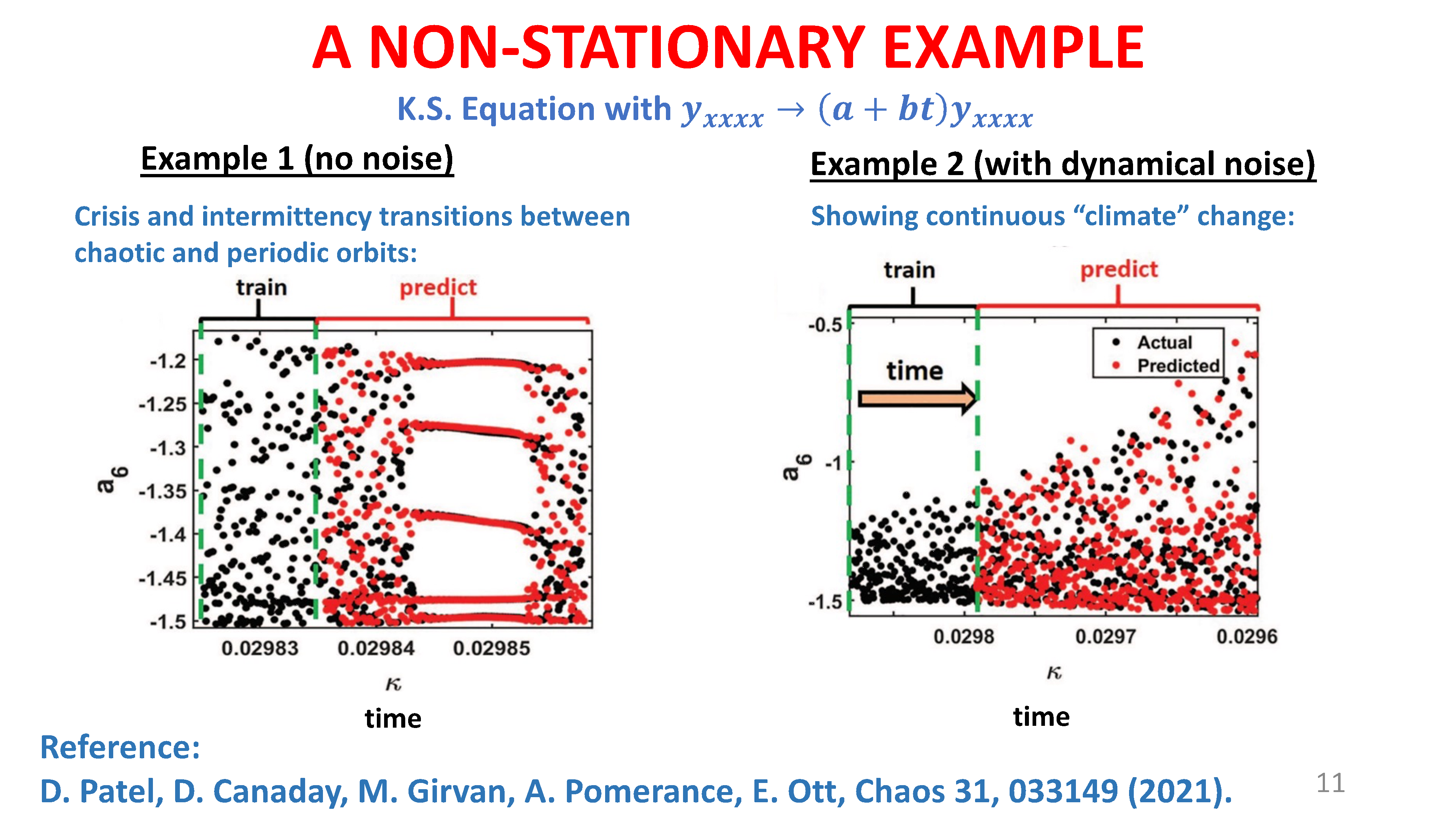
Extensions of our previous work on purely machine-learning-based climate and tipping point prediction to hybridization of the machine-learning-based component with a physics-based component.
4. Kickoff Meeting PowerPoint Presentation